01
The pivot is an average
Each band reflects around its own slow running average. A threshold has to be found again for every source and every gain staging; an average means the knob does the same thing on a −30 dBFS loop and on a mastered file.
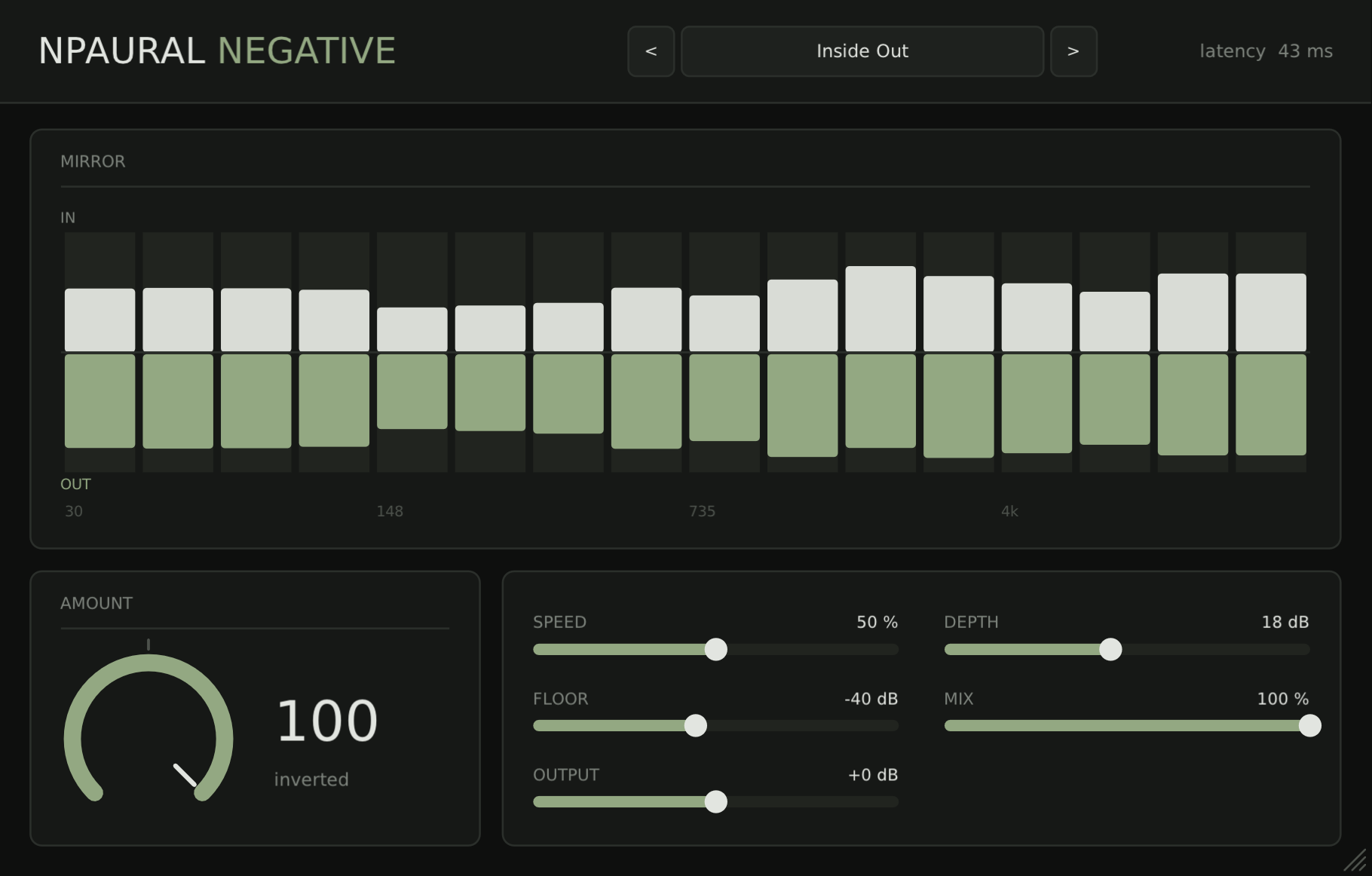
Sixteen bands from 30 Hz to 18 kHz, and 8 presets to hear it through: Inside Out, Ghost Room, Reverse Gravity, Barely There and 4 more. Nothing to pay, nothing to activate, no account, no address asked for and nothing reported to any server.
Compressors narrow the distance between loud and quiet, expanders widen it, and no setting on either gets you the room and the tails as the subject. Negative reflects that distance instead - a mix turned inside out, not a mix squashed.
No threshold to hunt for, no attack or release to guess at, nothing to set again when the source changes: all sixteen bands keep their own average as they go. One knob takes the lot from dry, through levelled, to completely inside out.
Each band reflects around its own slow running average. A threshold has to be found again for every source and every gain staging; an average means the knob does the same thing on a −30 dBFS loop and on a mastered file.
A 43 ms analysis window fixed in time rather than samples, so the sound does not change with the session rate, split into 16 bands from 30 Hz to 18 kHz. They peak at different moments, so when the kick is pushed down the hats, the tail and the room come up into the hole it leaves.
Amount runs dry at 0, fully reflected at 100, and at 50 every band is pinned to its own average — everything equally loud. A levelling machine with no threshold and no attack time.
Listen
Amount 100. The hits recede and the room becomes the loudest thing in the loop.
Loudness matched. Source: The Stubble Field Break (Mana Mixed), mana_junkie (CC BY 3.0)
Amount 50 pins every band to its own average, with no threshold and no attack time.
Loudness matched. Source: Morning Star, salvatoreJ (CC BY 3.0)
Numbers
Inside Out · Ghost Room · Flatten · Reverse Gravity · Dust Lift · Undertow (Parallel) · Barely There · Total Negative
Get it
No account, no email, no licence key.
More plugins
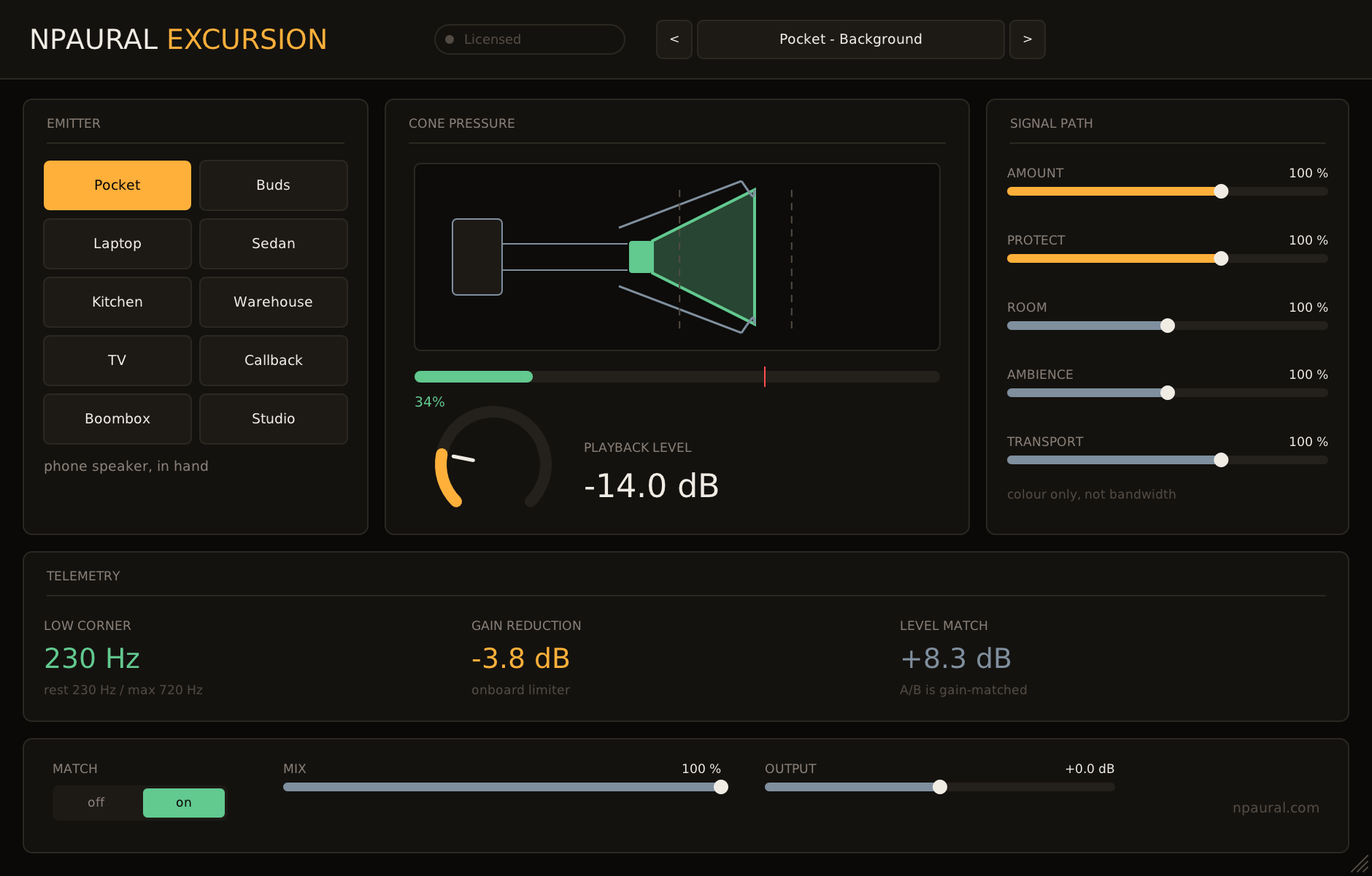
Plays your track through a speaker too small for it.
€39/VST3 · CLAP · AU
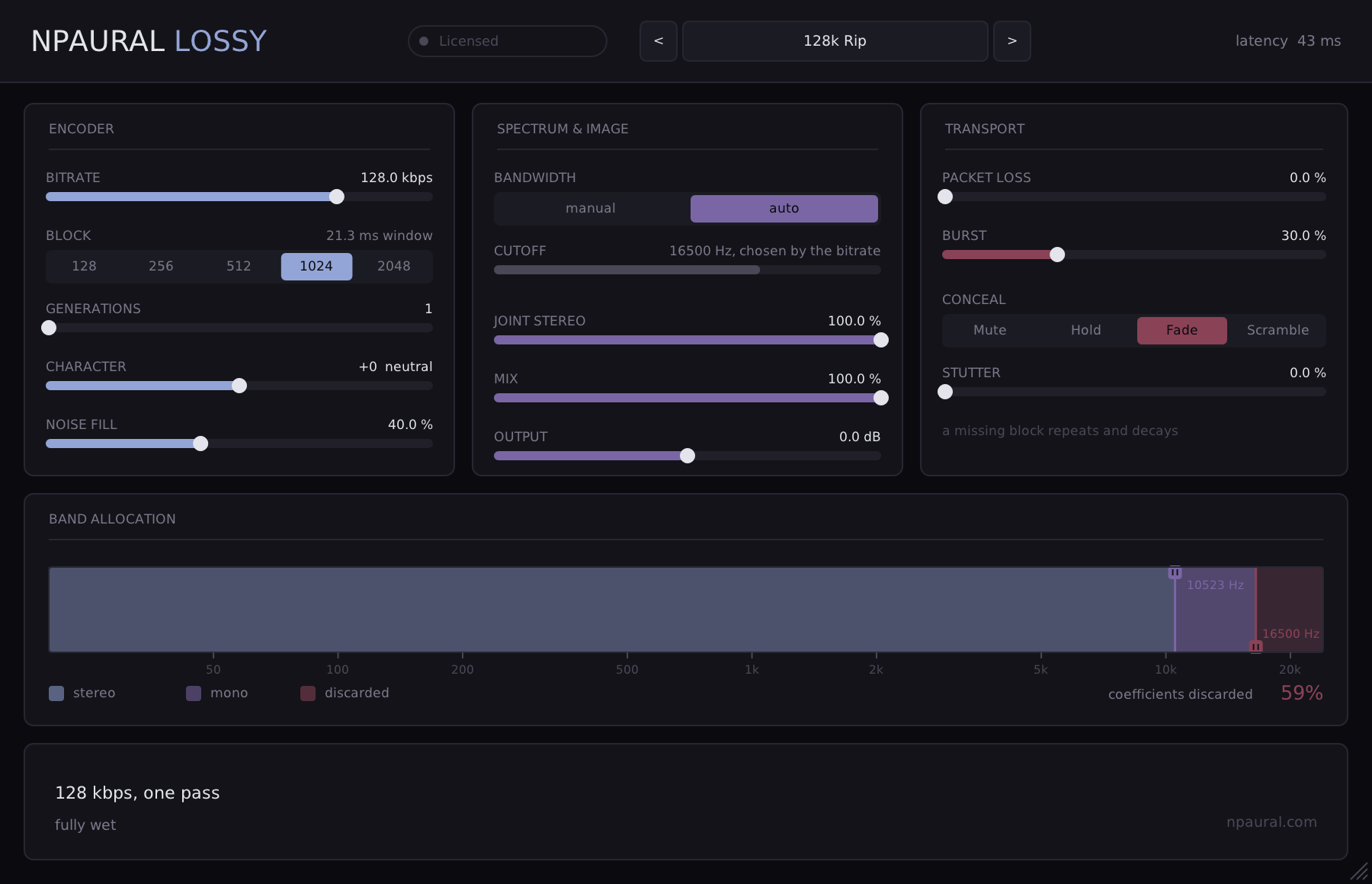
Audio compression you can starve until it breaks.
€29/VST3 · CLAP · AU
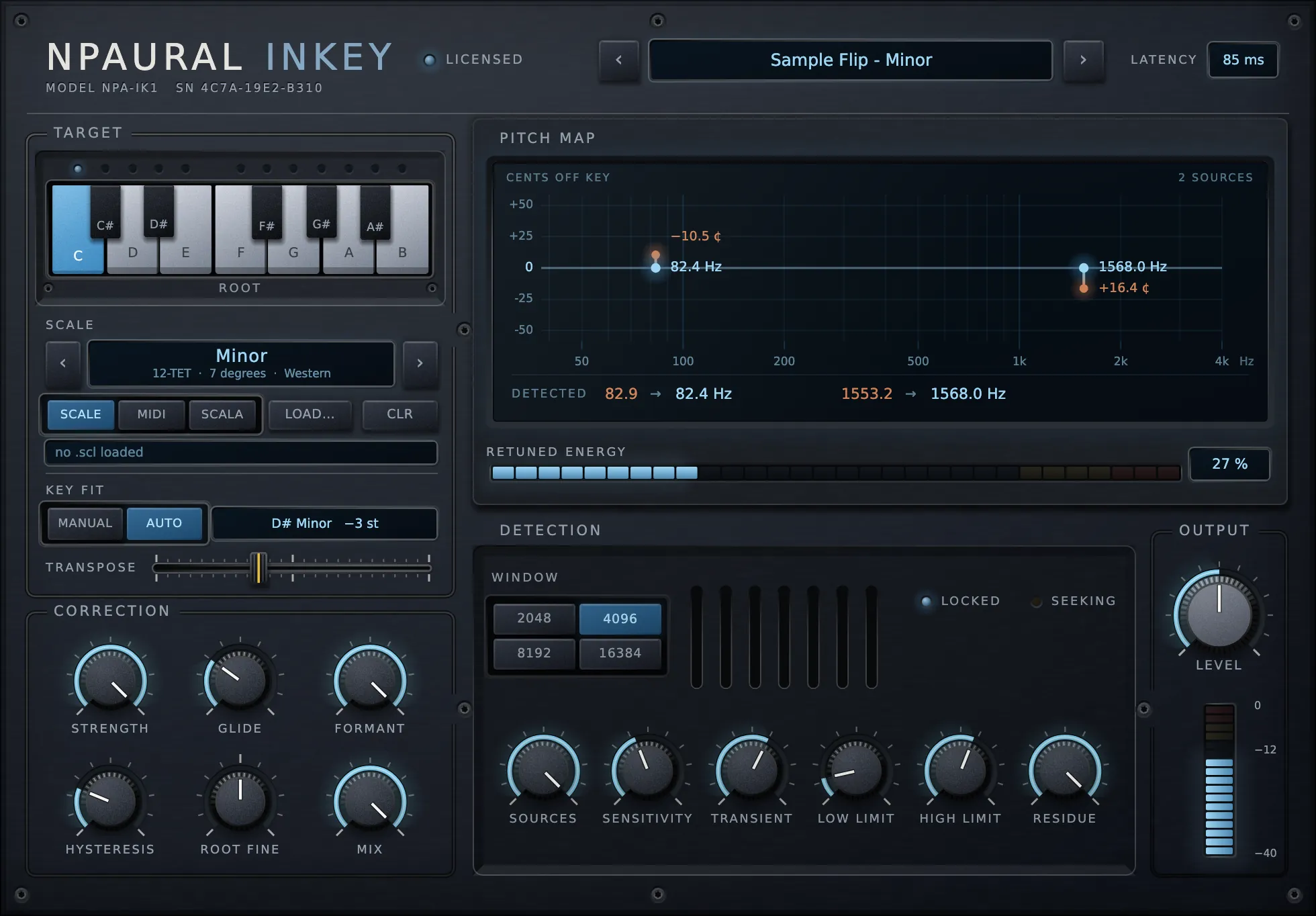
Retunes a sample into your key while it plays, chords intact.
€39/VST3 · CLAP · AU
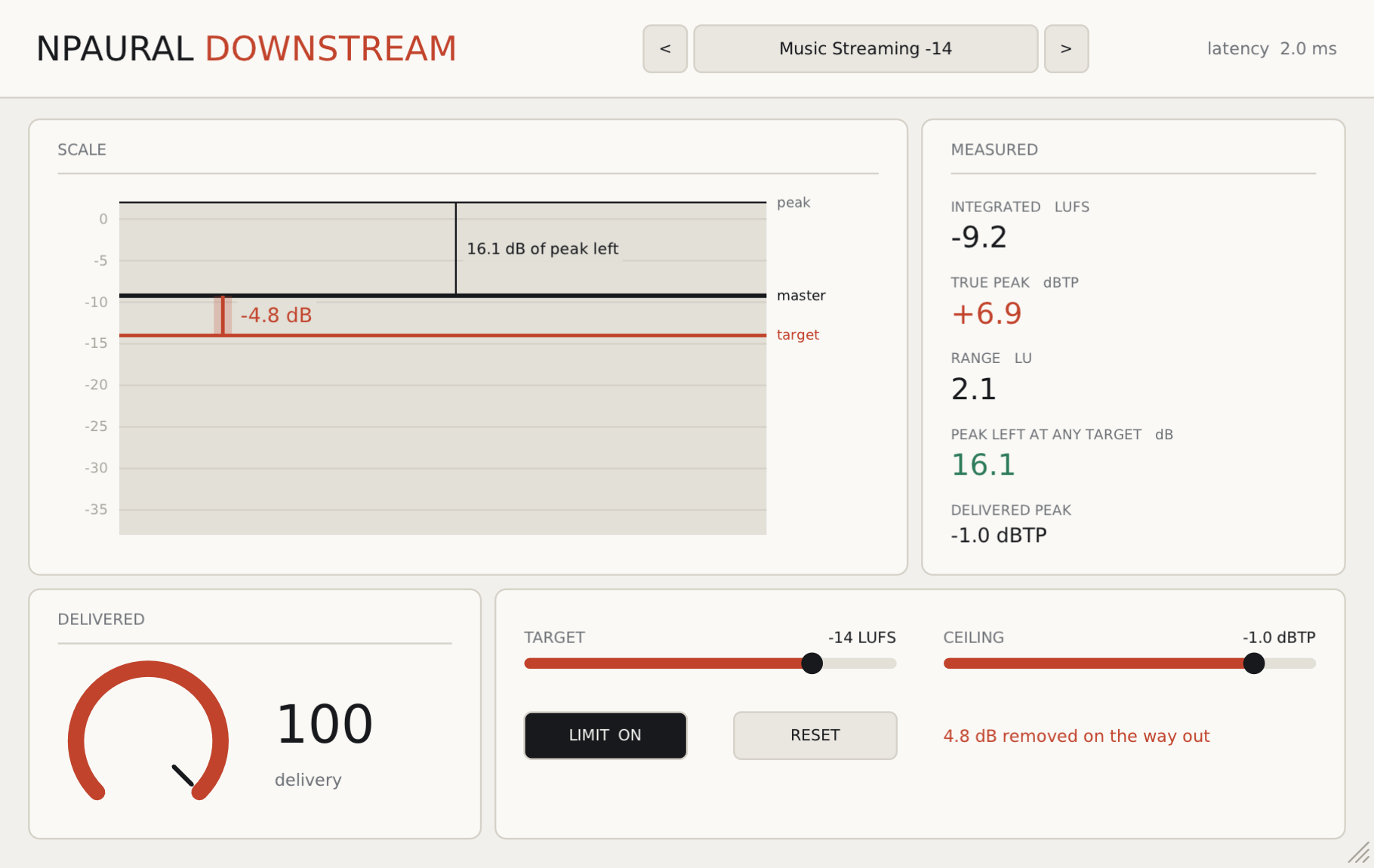
Applies the loudness a delivery target implies, so you hear what the listener gets instead of a number.
Free/VST3 · CLAP · AU · LV2
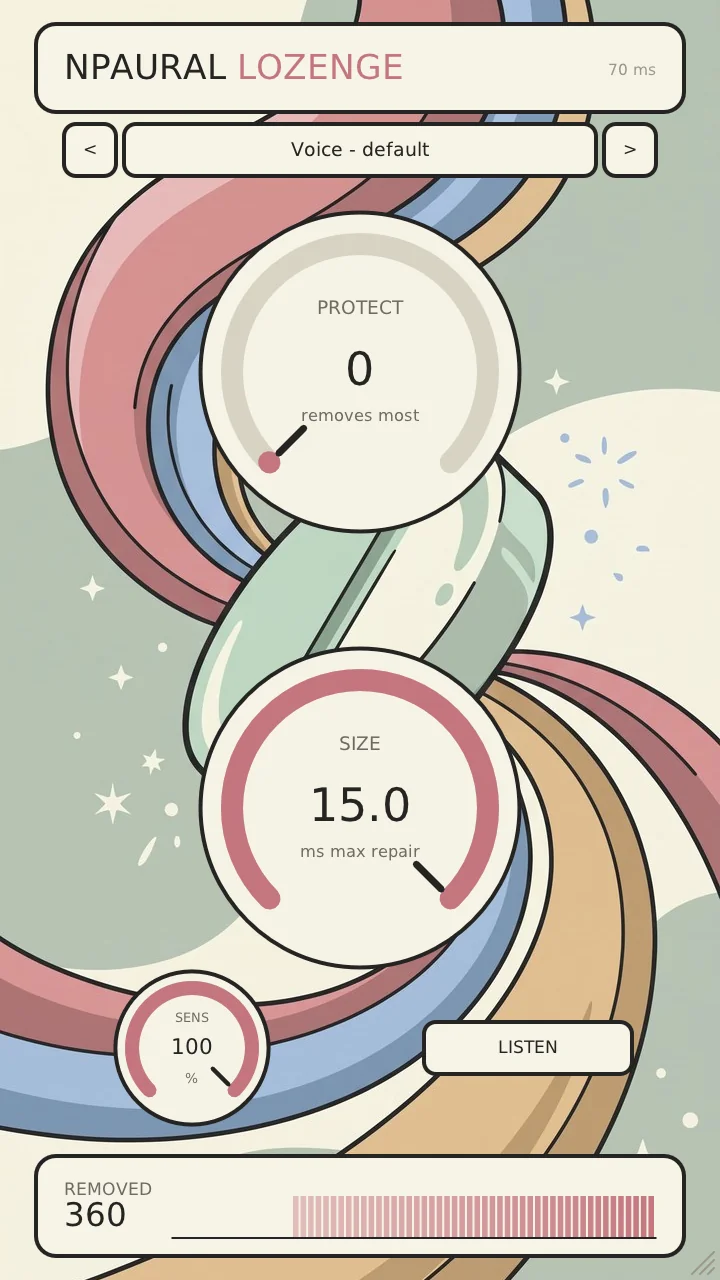
Takes mouth clicks out of your recording, and leaves the consonants in.
Free/VST3 · CLAP · AU · LV2
Negative is free and unlicensed: it asks for no address, creates no account, and reports nothing to any server. The comparisons above are to categories of processing — compressors, expanders, transient shapers — and not to any particular product. Nothing here is measured from, matched to or named after anything on sale.