01
Bit allocation
Loud sounds mask quiet ones near them in pitch and time. Lossy raises that whole map until the block fits the budget.
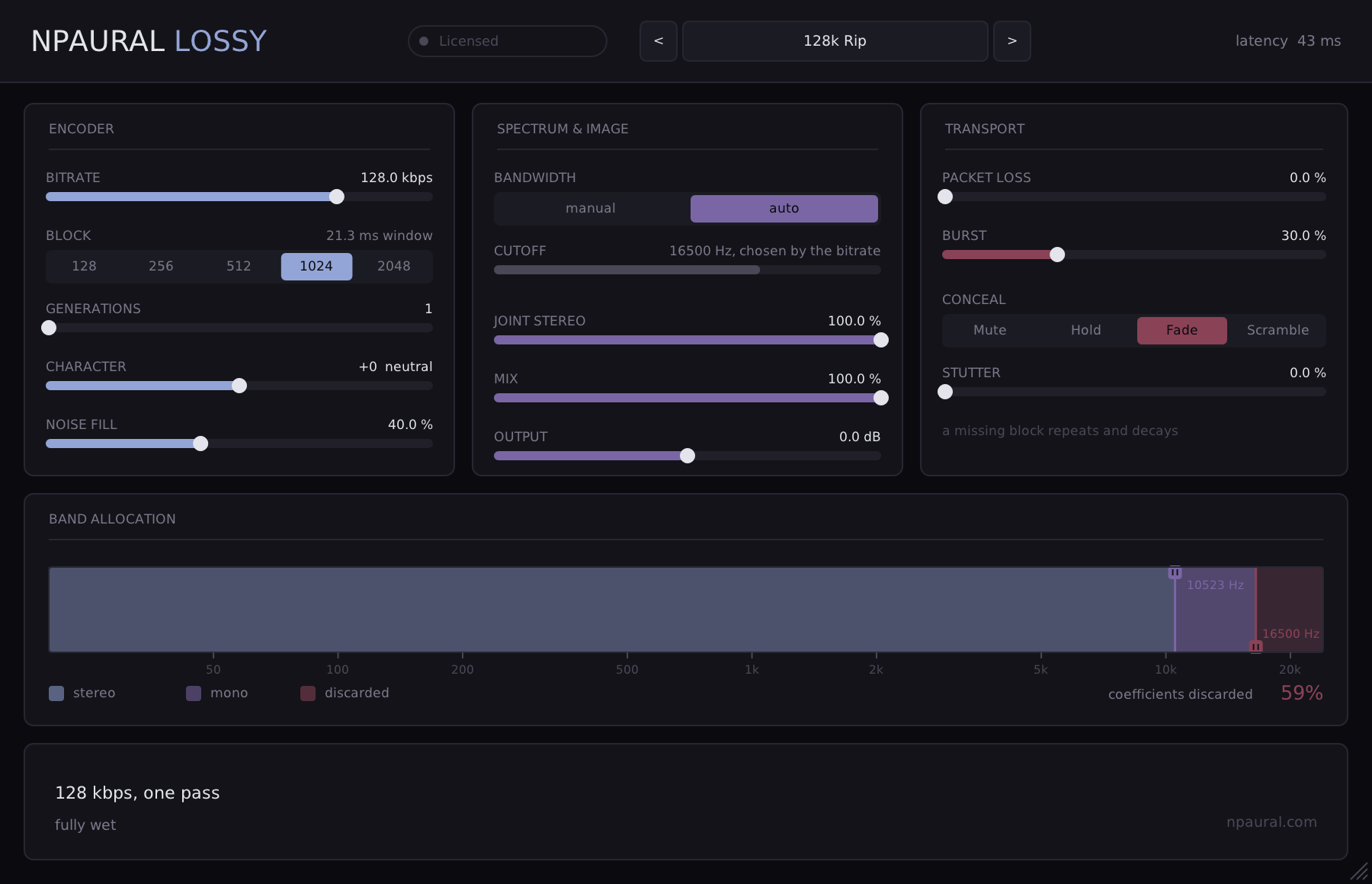
The whole range on one knob, clean at the top and unlistenable at the bottom, run one to six times over - once for a bad upload, six for a repost of a repost. 14 presets for the beloved 'used' and vintage sound: 128k rip, voice note, bad connection, deep fried and 10 more.
A bitcrusher and a filter are the usual stand-in, and everyone hears they are not it. Lossy makes the same call a real encoder makes - and then starves it, which gives it its familiar sound: the warble, the smeared hits, the top end closing to 3.8 kHz.
Hearing what an upload does to your track normally means exporting, encoding and dragging it back in to listen, then doing the whole round trip again for the next setting. Lossy sits on the channel and does it as you play, at any setting, automatically.
Loud sounds mask quiet ones near them in pitch and time. Lossy raises that whole map until the block fits the budget.
Up to six encode/decode passes, each on a different block phase, behaving like a real chain of reposts.
Packet loss in bursts, stuttering, and healing applied after compression. When bits run short the top of the spectrum goes mono first.
Listen
Less bits = more Lossy.
Loudness matched. Source: The Beat (Remastered 2026), gabriel_shelligton (CC BY 3.0)
Noise arriving before the hit that caused it. No bitcrusher has blocks.
Loudness matched. Source: The Stubble Field Break (Mana Mixed), mana_junkie (CC BY 3.0)
Numbers
128k Rip · 64k Stream · Voice Note · Reposted Eight Times · Deep Fried · Crunchy Drums · Pre-Echo · Bad Connection · Frozen Call · Dropouts · Glitch Bus · Under The Mix · Mono From The Top · Transparent
Get it
All prices are final prices. Any applicable taxes and charges are included, and there are no delivery costs. We accept: Card, Apple Pay, Google Pay, PayPal, iDEAL, Bancontact, EPS, Revolut Pay. No delivery restrictions.
The full plugin, no time limit. Until a licence is on the machine, settings are not saved with a project.
No account, no email, no licence key.
More plugins
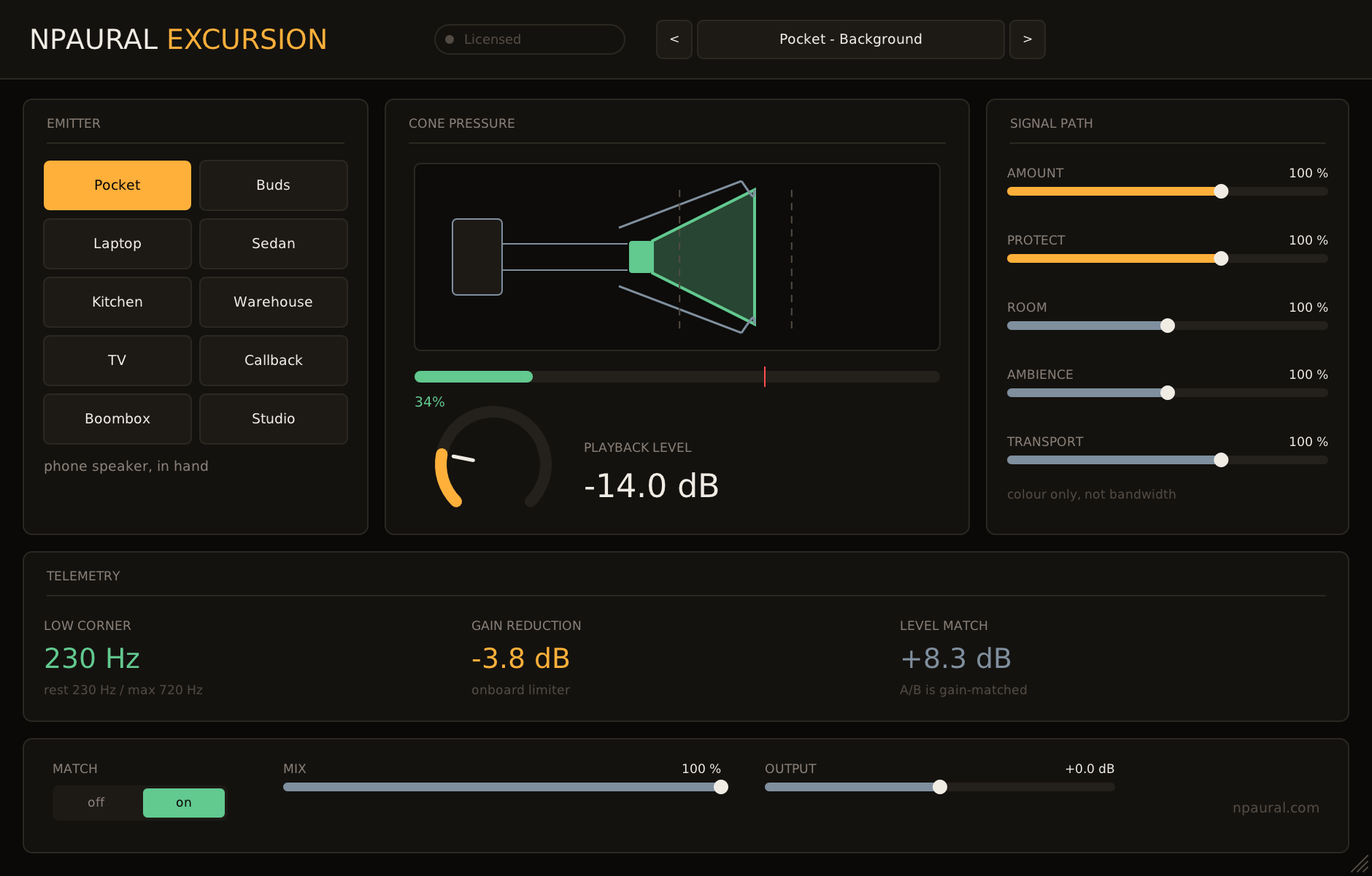
Plays your track through a speaker too small for it.
€39/VST3 · CLAP · AU
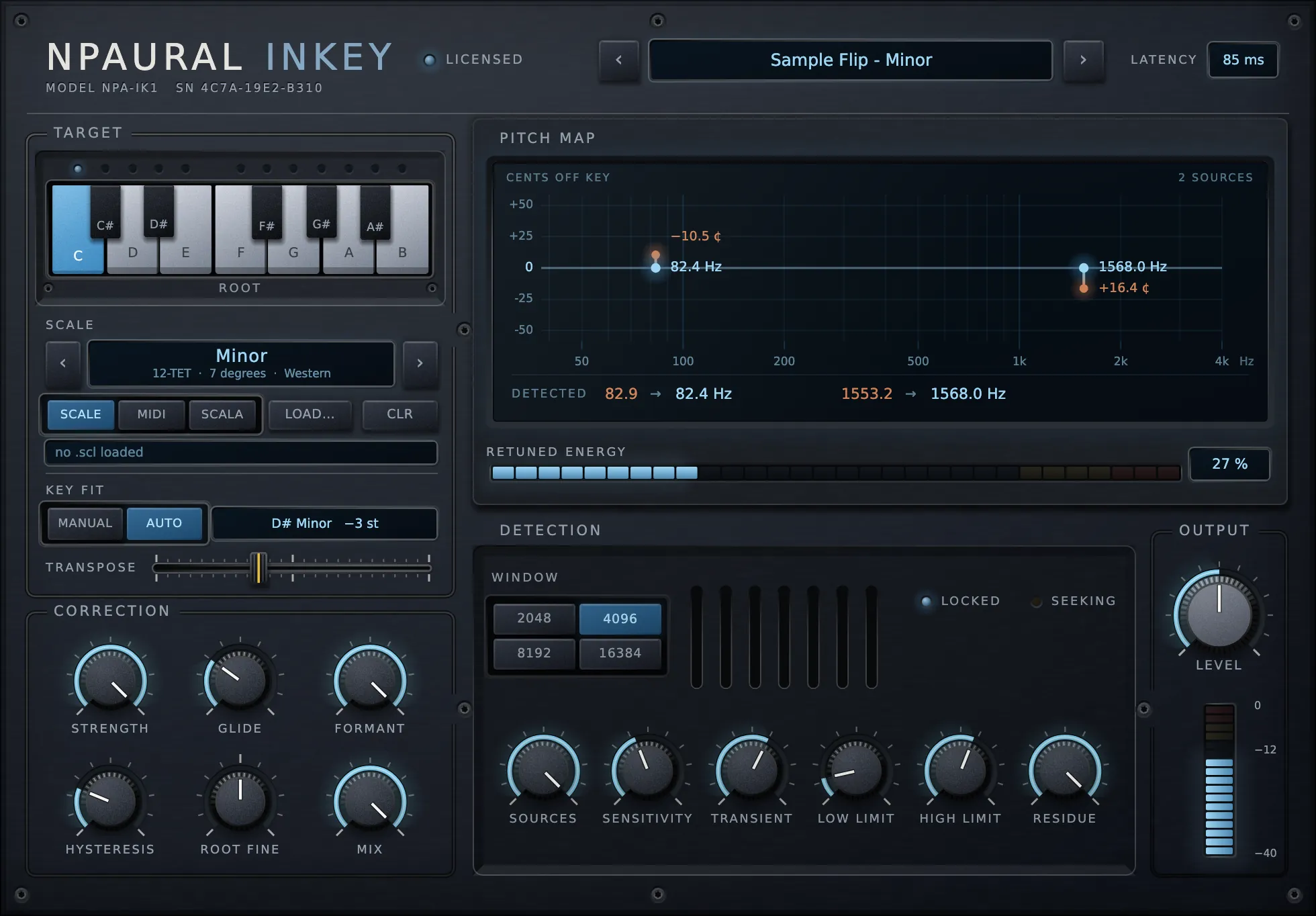
Retunes a sample into your key while it plays, chords intact.
€39/VST3 · CLAP · AU
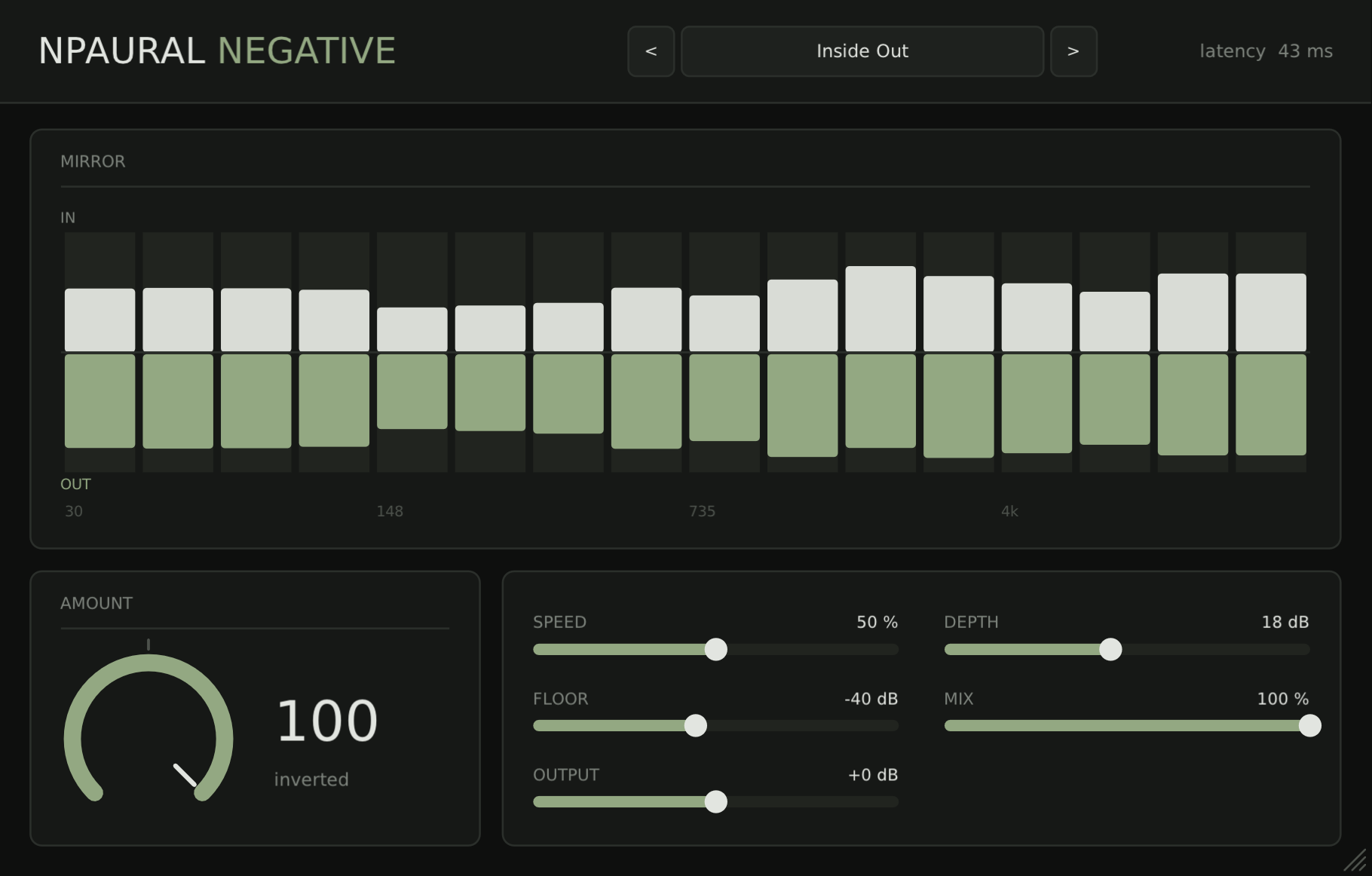
Inverts a mix's dynamics band by band, so what sat between the hits becomes the loudest thing in it.
Free/VST3 · CLAP · AU · LV2
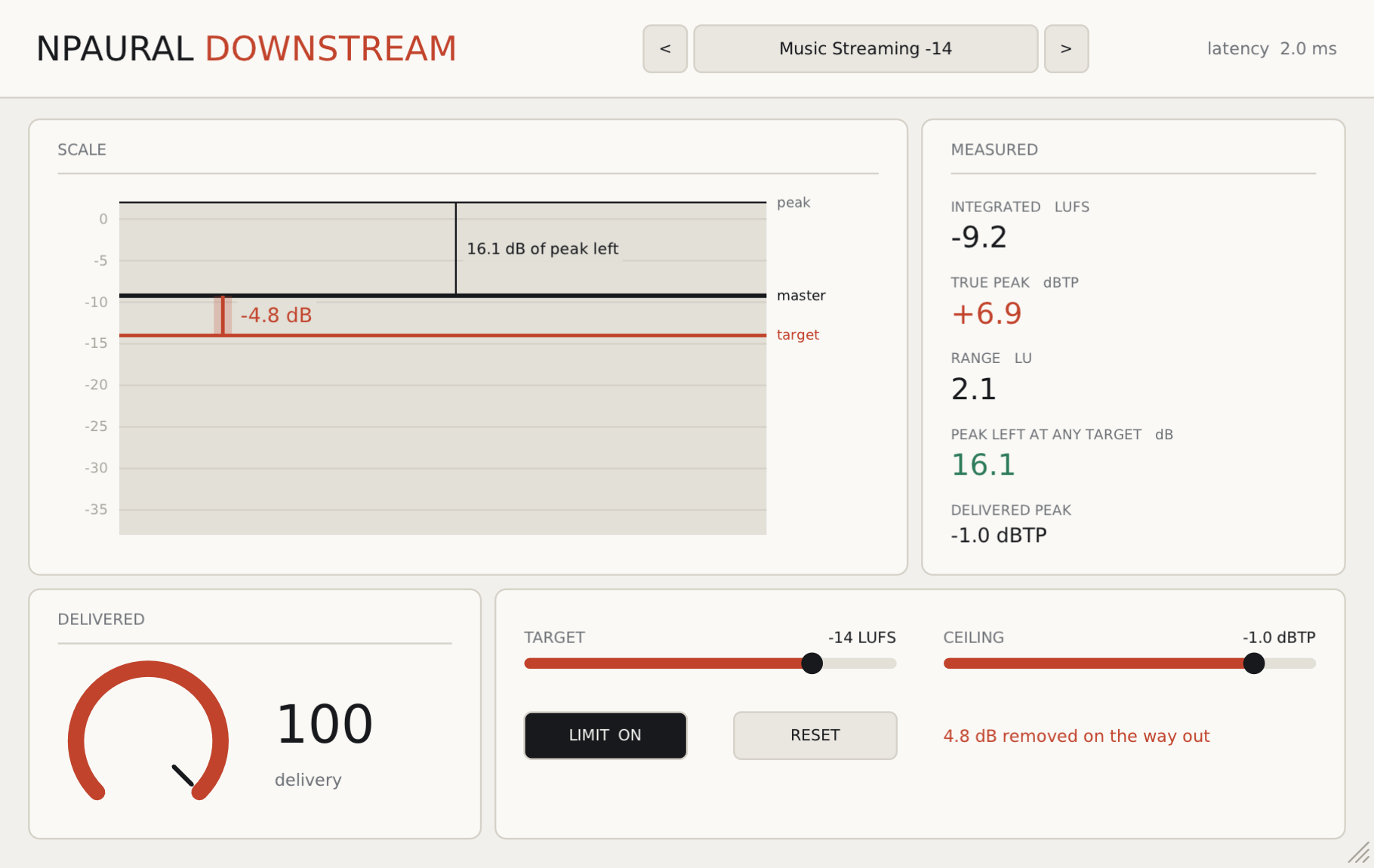
Applies the loudness a delivery target implies, so you hear what the listener gets instead of a number.
Free/VST3 · CLAP · AU · LV2
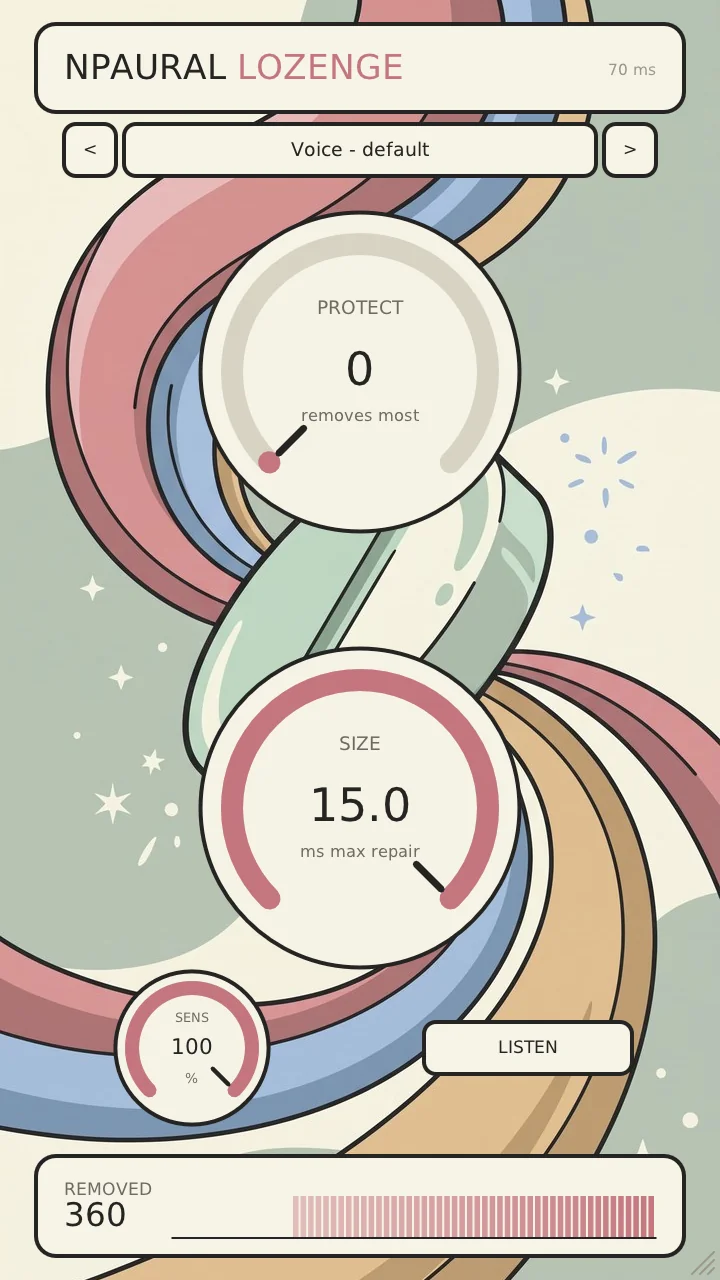
Takes mouth clicks out of your recording, and leaves the consonants in.
Free/VST3 · CLAP · AU · LV2
Lossy implements no published bitstream format, contains no format's tables, and cannot read or write any format's files. It is not an MP3 encoder and it is not an AAC encoder. It reproduces the artifacts by doing the same kind of work, not by reimplementing anyone's codec.