01
Protection runs first
Small speakers have a circuit that strips the bass out as the cone nears its limit, so it never tears itself apart. On Pocket the roll-off starts at 230 Hz and rises with level, reaching 490 Hz by +18 dB.
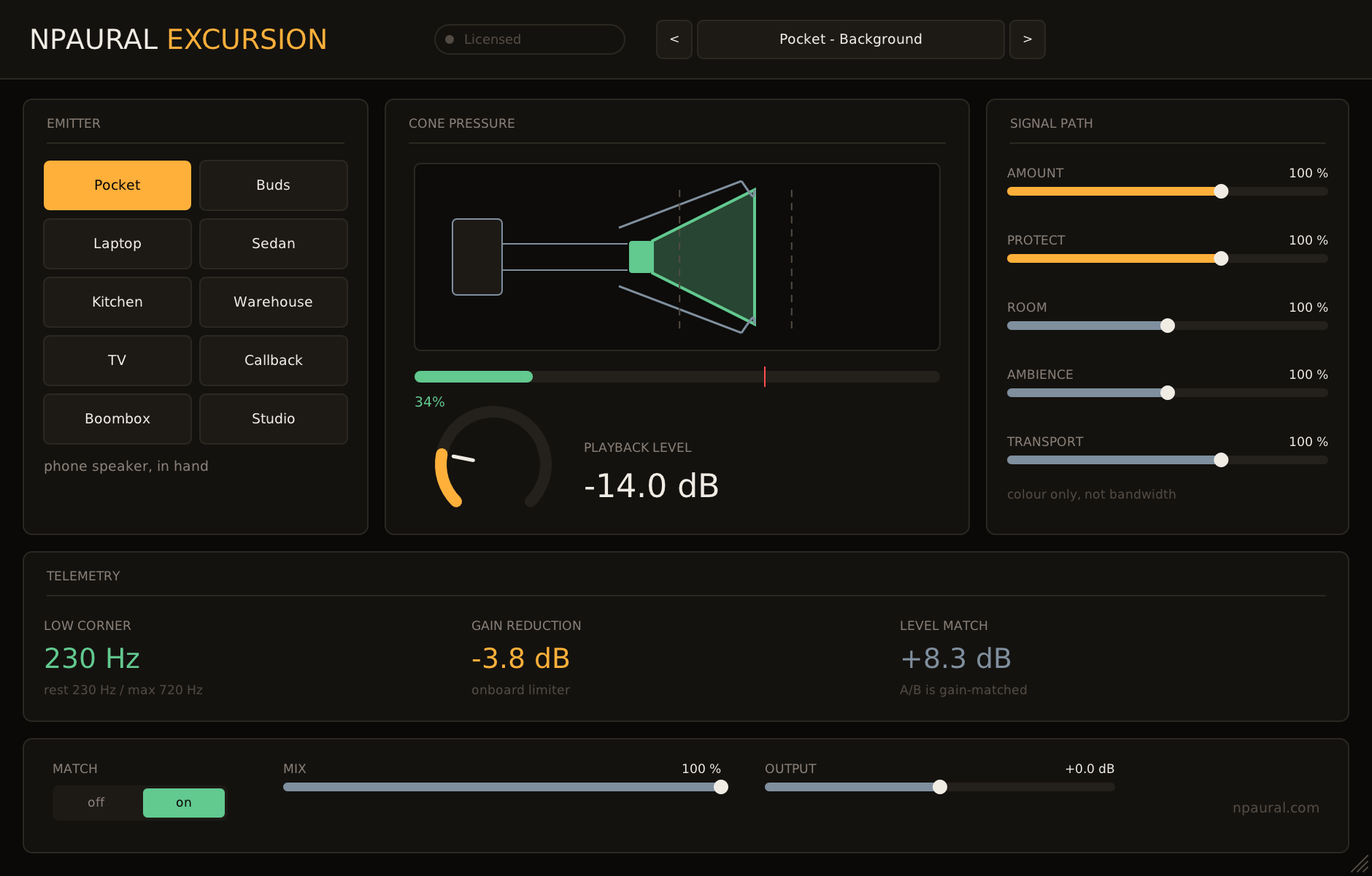
Ten things to play a track out of, each with its own driver, its own protection circuit and its own room behind it: a phone in a pocket, buds on a train, a laptop, a car at speed, a club rig and 8 more presets, from barely-there to completely wrecked.
A filter is the same filter however loud you play it, which is why every lo-fi speaker preset sounds like an EQ. This one is a cone: drive it harder and the bass leaves on its own, the motor loses grip and the distortion comes in unevenly, the way it does out of a real one.
Drop it on a bus, a vocal or a drum loop, pick a place, set how hard you are driving it. Mix blends it back against the dry track, so the same plugin is a hard phone-speaker effect or a thin layer under what you already have.
Small speakers have a circuit that strips the bass out as the cone nears its limit, so it never tears itself apart. On Pocket the roll-off starts at 230 Hz and rises with level, reaching 490 Hz by +18 dB.
A driver is a mass on a spring pushed by a magnet. The suspension stiffens as it stretches, the magnet loses grip at the extremes, and it is not quite symmetric, creating distortion. Solved four times per sample.
Port chuffing is triggered by cone speed rather than track level, stereo narrowing, drivers bleeding into each other, and the room behind added to it.
Listen
Six places your mix has to survive, none of them named after a product.
Loudness matched. Source: Spheres (Hip Hop Instrumental), Robbero (CC BY 3.0)
One speaker, three playback levels, volume matched. Loud is a different sound.
Loudness matched. Source: Spheres (Hip Hop Instrumental), Robbero (CC BY 3.0)
Numbers
Pocket - Background · Pocket - Turned Up · Buds On A Train · Laptop At A Desk · Car At Speed · Kitchen Counter · Club At Volume · Across The Room · Sent As A Voice Note · Outside On A Table · Reference · Under The Mix · Everything Wrong
Get it
All prices are final prices. Any applicable taxes and charges are included, and there are no delivery costs. We accept: Card, Apple Pay, Google Pay, PayPal, iDEAL, Bancontact, EPS, Revolut Pay. No delivery restrictions.
The full plugin, no time limit. Until a licence is on the machine, settings are not saved with a project.
No account, no email, no licence key.
More plugins
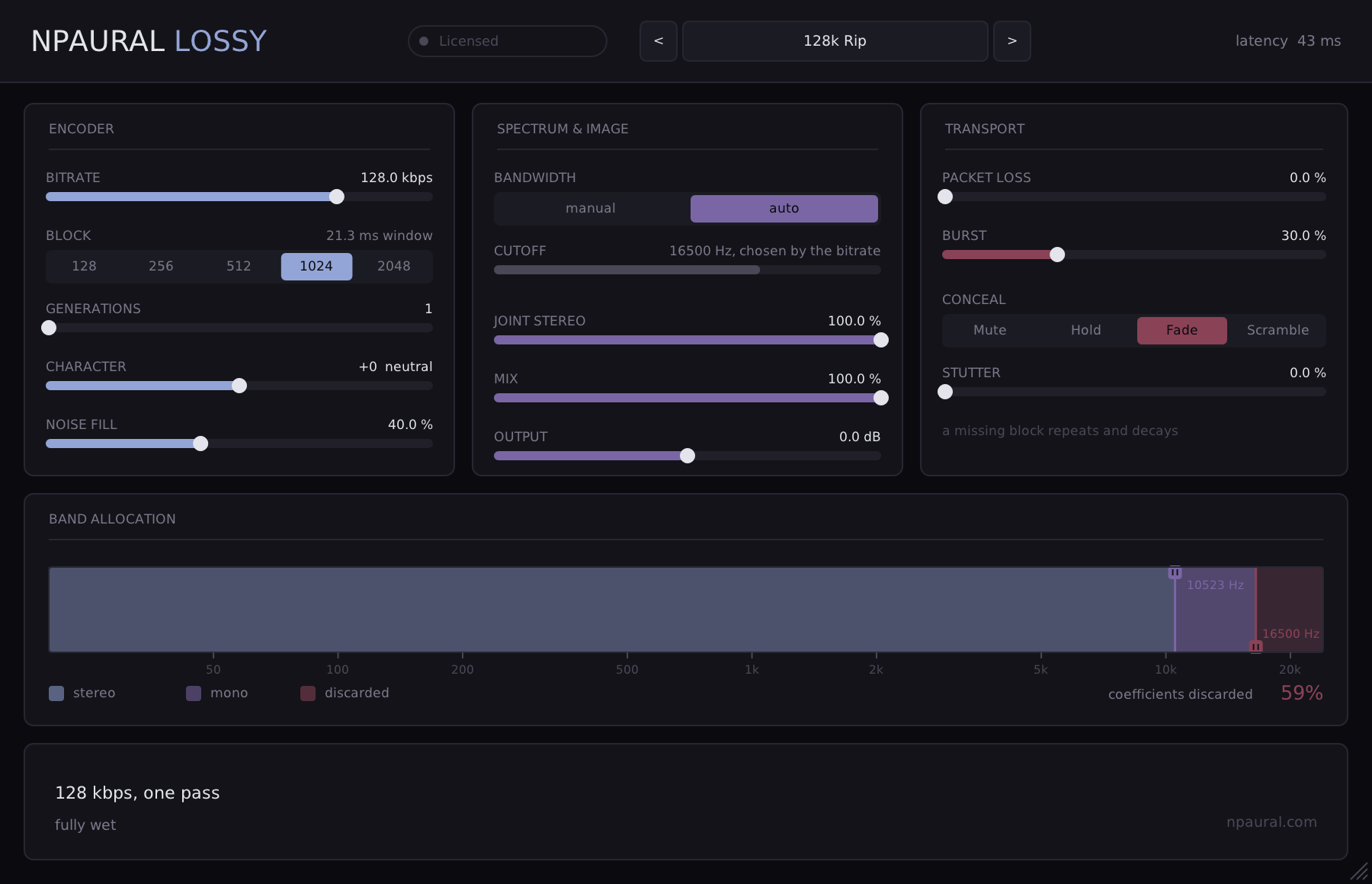
Audio compression you can starve until it breaks.
€29/VST3 · CLAP · AU
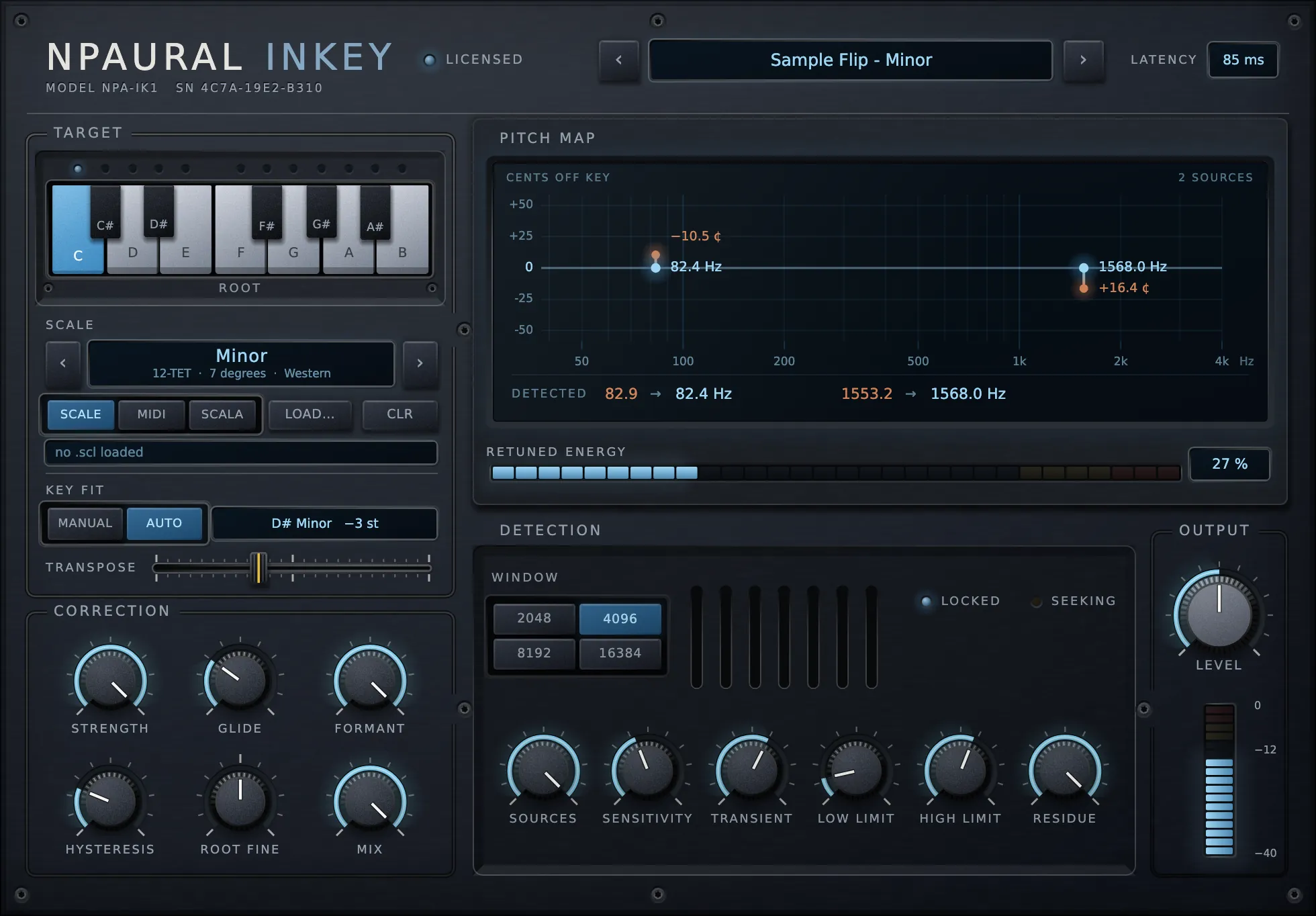
Retunes a sample into your key while it plays, chords intact.
€39/VST3 · CLAP · AU
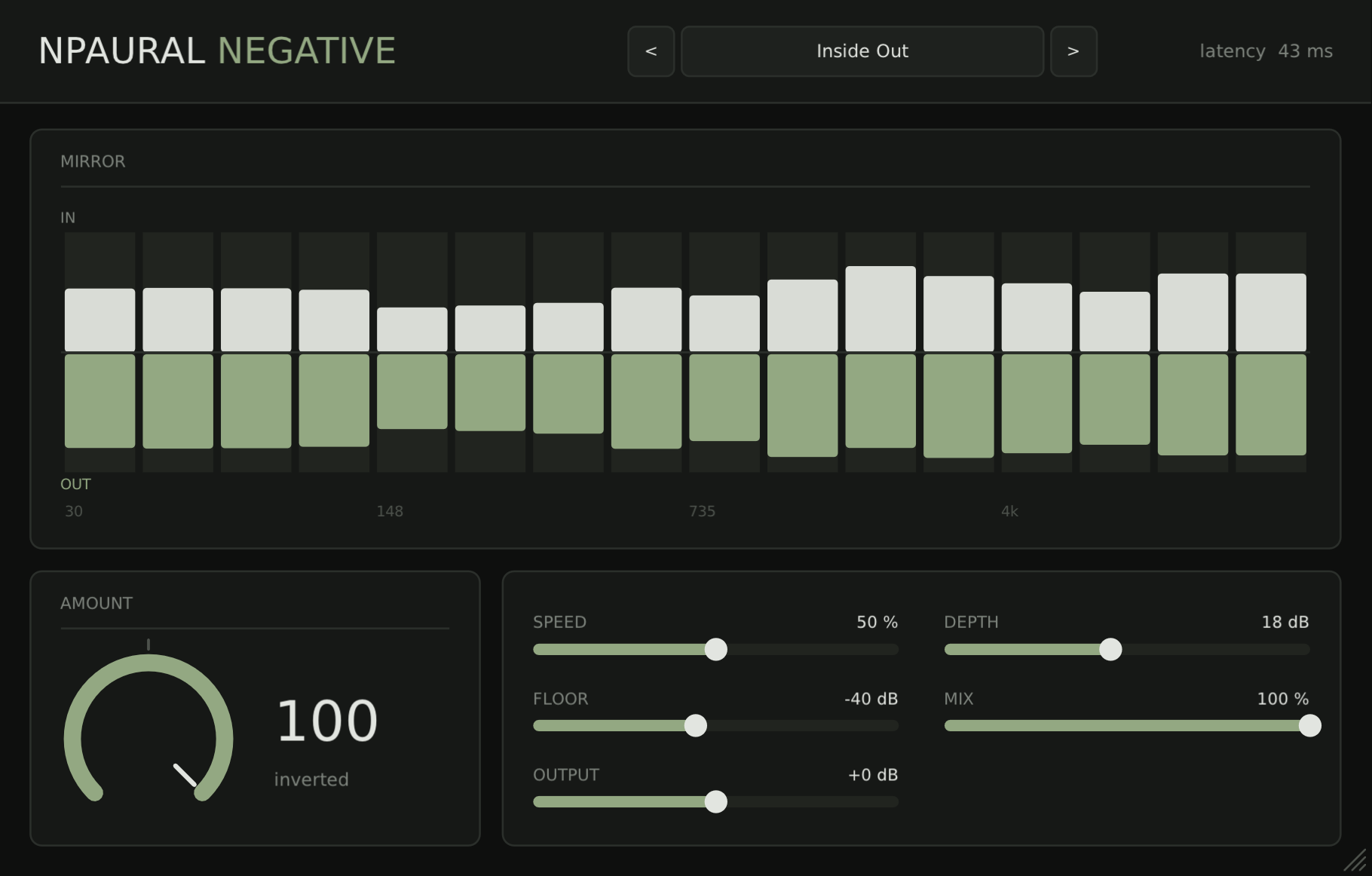
Inverts a mix's dynamics band by band, so what sat between the hits becomes the loudest thing in it.
Free/VST3 · CLAP · AU · LV2
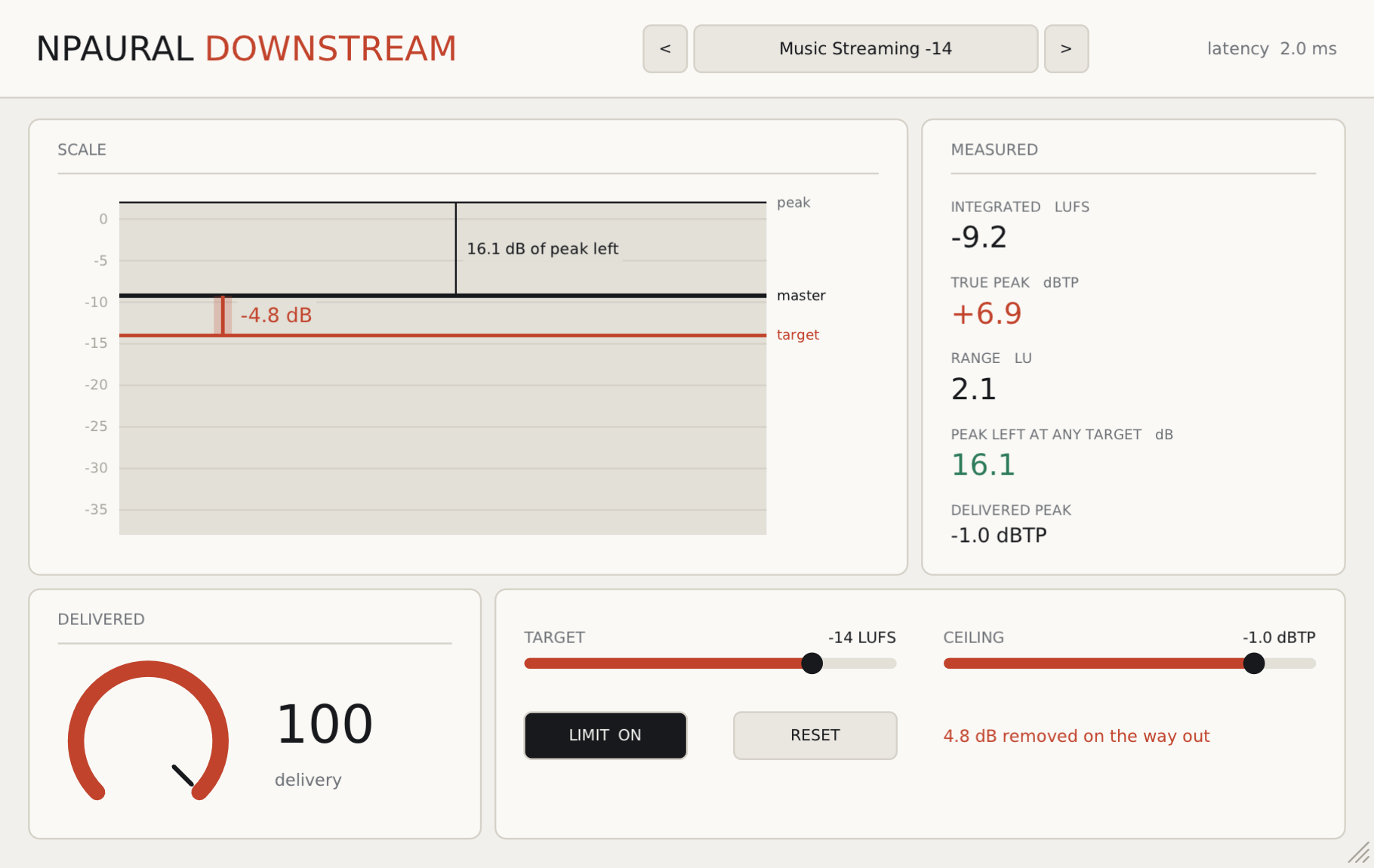
Applies the loudness a delivery target implies, so you hear what the listener gets instead of a number.
Free/VST3 · CLAP · AU · LV2
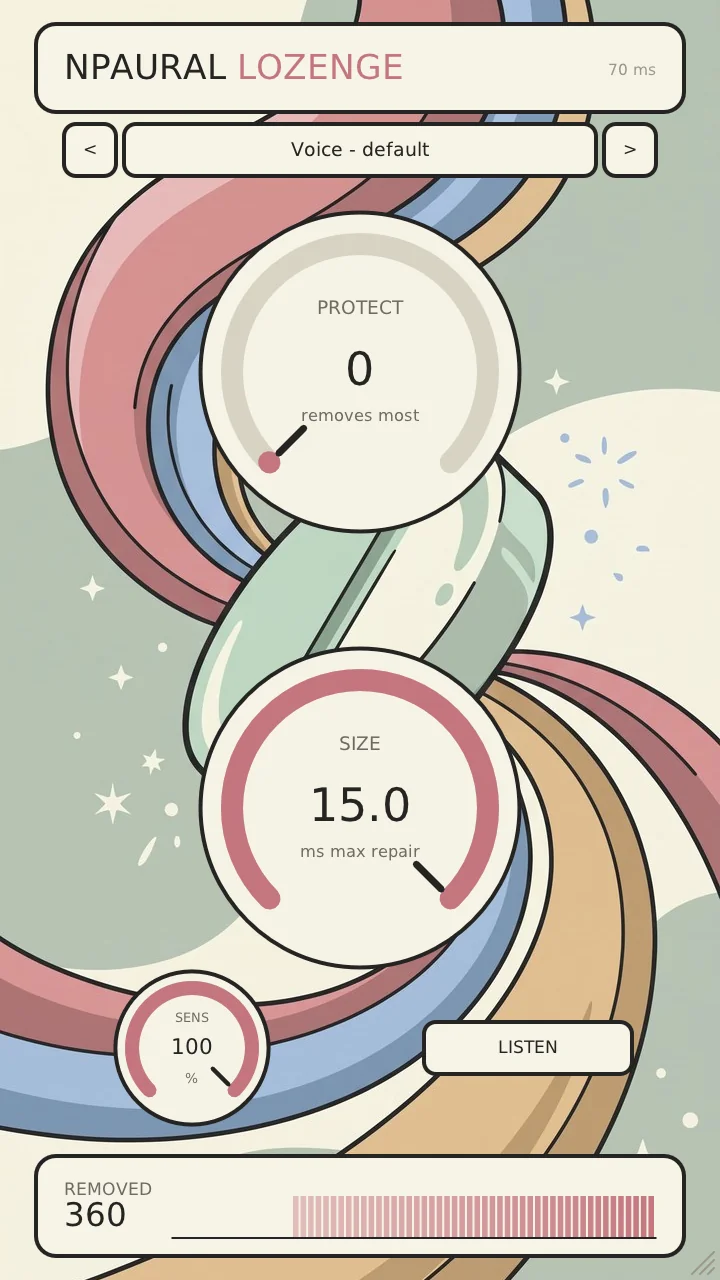
Takes mouth clicks out of your recording, and leaves the consonants in.
Free/VST3 · CLAP · AU · LV2
Environments are simulated. Nothing is named after, measured from or matched to any device on sale, and every response is generated rather than sampled. Excursion is an effect built from published loudspeaker physics and does not reproduce any specific product.